Last spring, we pulled every utensil, container, and cleaning product out of our kitchen cabinets and laid them across the counter. The result was sobering: almost everything was plastic. Scratched Tupperware we’d been microwaving for years. A drawer full of sponges that smelled no matter how often we replaced them. Three half-empty bottles of chemical cleaner under the sink. It looked like a landfill rehearsal.
That afternoon started a year-long process of swapping things out — not all at once, but piece by piece as things wore out. Twelve months later, our kitchen is cleaner, quieter, and costs us less to run. Here’s exactly what we changed and why.
Spring is the perfect excuse to take a hard look at what’s lurking in your kitchen drawers, under your sink, and on your countertops. Most of us inherited a kitchen full of plastic — and with it, a steady drip of microplastics, synthetic chemicals, and waste we never signed up for.
The good news: you don’t need to overhaul everything at once. Swap one thing this week, another next month. Each change compounds. Here are nine zero-waste kitchen swaps worth making this spring — ranked from easiest to most impactful.
🌱 The golden rule: Use what you already have first. Only swap when something wears out or needs replacing. That’s how real, lasting change works.
🧹 1. Plastic Sponges → Natural Dish Brushes or Coconut Scrubbers
That neon sponge by your sink is shedding microplastics straight into your drain every time you scrub a pan. Conventional sponges are also treated with antimicrobial chemicals like triclosan that don’t break down in water systems and have been linked to hormone disruption in peer-reviewed research.
✅ Try instead: A wooden-handle dish brush with natural bristles (sisal or tampico fiber), or a coconut coir scrubber for tougher jobs. Both compost completely at end of life. A single natural-bristle brush typically outlasts 3–4 plastic sponges — making it both the cleaner and more affordable option long-term.
🧴 2. Paper Towels → Swedish Dishcloths
The average American household uses 80+ rolls of paper towels per year, according to industry data. That’s trees, water, chlorine bleach, and plastic packaging — all for something you use once and toss.
✅ Try instead: Swedish dishcloths made from cellulose and cotton. They absorb 15–20x their weight in liquid, survive hundreds of washing machine cycles, and fully compost when they’re done. One cloth replaces roughly 17 rolls of paper towels — a swap that pays for itself within weeks.
🌯 3. Plastic Wrap → Beeswax (or Plant-Wax) Wraps
Cling film is single-use, non-recyclable in most municipal systems, and studies show it can leach plasticizers (phthalates and DEHA) — especially when it contacts warm or fatty foods. It remains one of the most wasteful items in the average kitchen.
✅ Try instead: Beeswax wraps for covering bowls, wrapping cheese, or storing half-cut produce. They breathe slightly (so food stays fresher longer), seal with the warmth of your hands, and last about a year of regular use before you compost them. Soy-based and candelilla plant-wax versions are available for vegan households.
🍲 4. Plastic Food Storage → Glass Containers
Plastic containers degrade over time, especially when exposed to microwave heat or dishwasher cycles. Scratched surfaces harbor bacteria and release measurable amounts of microplastics into your food with every reheat — a concern that has prompted the American Academy of Pediatrics to recommend limiting plastic contact with hot food.
✅ Try instead: Borosilicate glass containers with snap-lock lids. They’re oven-safe, freezer-safe, and won’t stain or absorb odors. A quality glass set lasts a decade or more versus replacing plastic every year or two. Brands like Pyrex and Glasslock are widely available at major U.S. retailers.
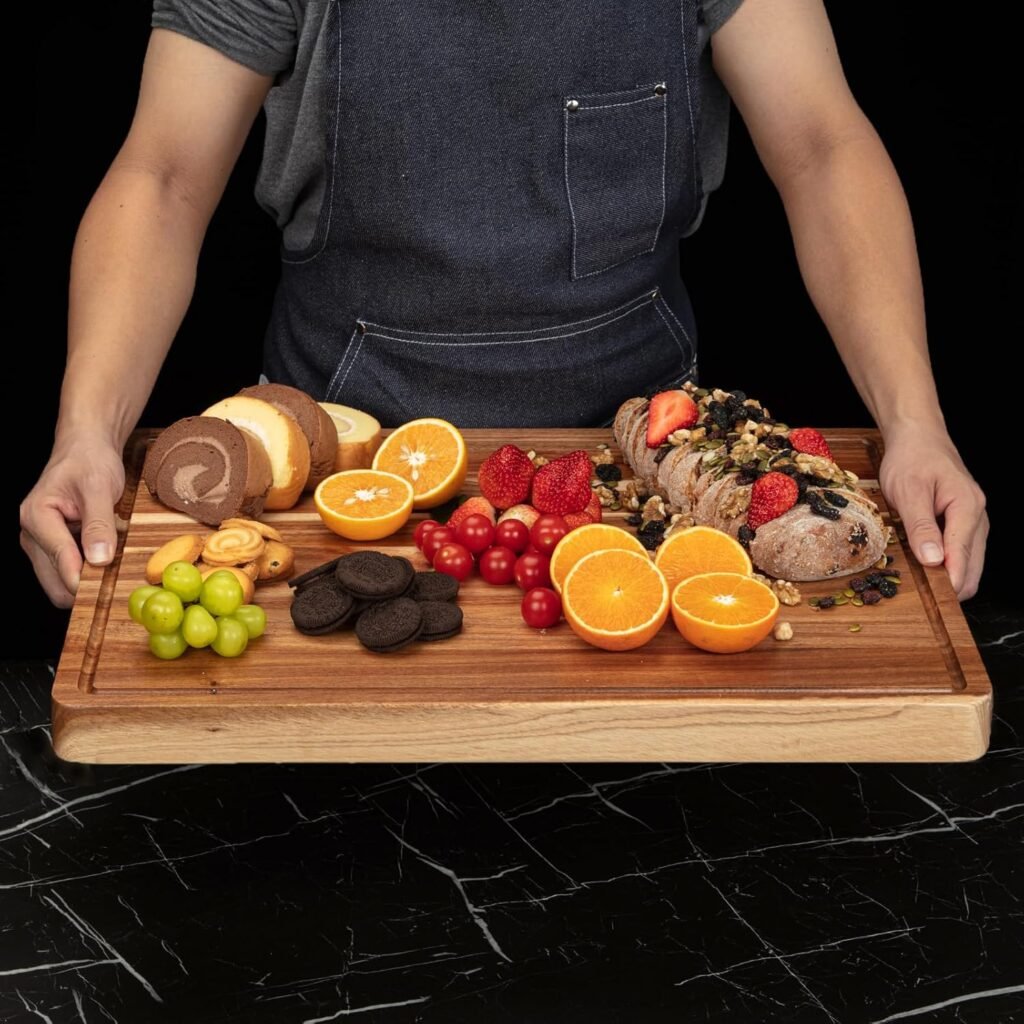
🪓 5. Plastic Cutting Boards → Wood or Bamboo
Every knife stroke on a plastic cutting board releases microplastic particles directly onto the food you’re about to eat. A 2023 study published in Environmental Science & Technology estimated that a single polyethylene cutting board can shed tens of millions of microparticles per year under normal use. (We wrote about this in detail in our post on wood vs. plastic cutting boards.)
✅ Try instead: End-grain hardwood (maple, walnut, cherry) or bamboo boards. Wood is naturally antibacterial — studies show that bacteria drawn into wood grain fibers die rather than multiply, unlike on plastic surfaces. With occasional mineral oil treatment, a good hardwood board lasts 10–20 years.
🍳 6. Plastic Utensils → Stainless Steel or Wood
Plastic spatulas and spoons warp under heat, melt at the edges over time, and shed material into hot food. Nylon utensils begin degrading at temperatures as low as 70°C (158°F) — well below the temperature of a simmering pot.
✅ Try instead: Stainless steel (18/10 grade) for maximum durability and heat resistance, or olive wood / beechwood for a warmer aesthetic that won’t scratch non-stick or stainless cookware. Both last essentially forever with basic care. (For more on building a non-toxic kitchen toolkit, check our guides.)
🧁 7. Liquid Dish Soap → Solid Dish Soap Bars
Most liquid dish soaps are 80–90% water by volume, shipped across the country in single-use HDPE plastic jugs. You’re paying to transport water and generating packaging waste every few weeks — waste that even curbside recycling programs struggle to process efficiently.
✅ Try instead: A concentrated solid dish soap bar. These cut through grease just as effectively, last 2–3x longer than a standard 16 oz bottle of liquid, and come in compostable or completely package-free formats. Brands like No Tox Life and Bestowed Essentials are popular choices in the U.S. zero-waste community.
☕ 8. Paper Coffee Filters → Reusable Cloth Filters
If you brew coffee daily, you’re going through roughly 500 paper filters a year — many bleached with chlorine and lined with a thin polypropylene seal. Multiply that across the estimated 150 million daily coffee drinkers in the U.S. and the waste adds up fast.
✅ Try instead: Organic cotton or hemp cloth filters. They’re machine-washable, fully biodegradable, and many specialty coffee enthusiasts prefer them because cloth allows more natural oils through than paper — producing a richer, fuller-bodied cup. One cloth filter typically lasts 6–12 months of daily use.
🍋 9. Chemical Cleaners → DIY Vinegar + Citrus Spray
Most commercial kitchen cleaners contain synthetic fragrances, surfactants (like sodium lauryl sulfate), and preservatives that linger on food-contact surfaces. The Environmental Working Group (EWG) rates many mainstream kitchen sprays as moderate-to-high health concerns — and they all come in single-use plastic bottles.
✅ Try instead: White vinegar infused with citrus peels (lemon, orange, or grapefruit) for two weeks, then strained into a glass spray bottle. Add a few drops of tea tree oil for extra antimicrobial action. It handles grease, countertops, and stovetops without leaving chemical residue. (We have a full recipe in our DIY Citrus Vinegar Cleaner post.)
📊 Quick Reference: All 9 Swaps at a Glance
| Ditch This | Swap To | Lasts | Saves |
|---|---|---|---|
| Plastic sponge | Natural dish brush | 3–4x longer | $15–$25/yr |
| Paper towels | Swedish dishcloth | = 17 rolls each | $80–$120/yr |
| Plastic wrap | Beeswax wraps | ~1 year | $20–$40/yr |
| Plastic containers | Glass containers | 10+ years | $50+/yr |
| Plastic cutting board | Wood / bamboo | 10–20 years | $30+/yr |
| Plastic utensils | Steel / wood | Lifetime | $20+/yr |
| Liquid dish soap | Solid soap bar | 2–3x longer | $15–$30/yr |
| Paper coffee filters | Cloth filter | 6–12 months | $25–$40/yr |
| Chemical cleaners | DIY vinegar spray | Pennies/batch | $40–$60/yr |
Estimated total annual savings: $295–$505 per household. These aren’t theoretical — they’re based on average U.S. retail pricing and typical replacement cycles. Your mileage may vary, but the direction is clear: less waste, more money in your pocket.
The Real Rule: Use What You Have First
The most sustainable kitchen product is the one you already own. If your plastic spatula still works fine, keep using it. The goal isn’t to throw everything out and buy new — that defeats the purpose entirely. Make swaps as things wear out, break, or need replacing. That’s how real, lasting change works.
Pick one swap from this list and start there. By summer, your kitchen will look — and feel — noticeably different.
📩 Want More Like This?
We publish new zero-waste kitchen guides, clean recipes, and practical sustainability tips every week. If this post helped you rethink even one thing in your kitchen, you’ll get a lot out of what’s coming next.
Join the MZWK community → — Sign up on our homepage to get new posts delivered straight to your inbox. No spam, no fluff — just actionable steps toward a cleaner kitchen and a lighter footprint.
💬 What’s Your First Swap?
We’d love to hear from you. Which of these swaps have you already made? Which one are you trying next? Drop a comment below — your experience might be exactly what someone else needs to hear to take their first step.
And if you found this useful, share it with someone whose kitchen could use a spring reset. The more kitchens that shift, the bigger the impact.
Frequently Asked Questions
What is the easiest zero-waste kitchen swap to start with?
Replacing plastic sponges with natural dish brushes or coconut scrubbers is the simplest swap. It requires no habit change — just reach for a different tool. Brushes cost about the same, last longer, and compost at end of life instead of going to landfill.
Do zero-waste kitchen swaps actually save money?
Yes. While some items like glass containers have a higher upfront cost, most zero-waste alternatives — Swedish dishcloths, cloth coffee filters, solid dish soap bars — last significantly longer than their disposable counterparts. Most households break even within 2–3 months and save $300–$500 per year after that.
Are plastic cutting boards really unsafe?
Research shows that plastic cutting boards shed microplastic particles with every cut. A 2023 study in Environmental Science & Technology found that a single board can release tens of millions of particles annually. Wood boards are naturally antibacterial and don’t produce microplastic contamination.
What is the best alternative to plastic wrap for food storage?
Beeswax wraps are the most popular direct replacement. They seal with hand warmth, are washable, last about a year, and compost fully. For hot liquids or freezer storage, glass containers with silicone lids are a better option. Plant-based wax wraps offer a vegan alternative.
How do I make a natural kitchen cleaner?
Submerge citrus peels (lemon, orange, or grapefruit) in white vinegar in a sealed glass jar for two weeks. Strain, dilute 1:1 with water, and pour into a glass spray bottle. Add 5–10 drops of tea tree essential oil for additional antimicrobial properties. This all-purpose cleaner works on countertops, stovetops, and sinks.
Keep Reading
If you liked this post, here are a few more to keep the momentum going:
- Wood Cutting Board vs Plastic: Why We Finally Made the Switch
- DIY Citrus Vinegar Cleaner in 5 Days
- 5 Clean Ways to Use Citrus Peels (That Actually Work)
- Bokashi Composting for Small Kitchens: The Zero-Waste Guide
- Zero-Waste Kitchen Trends for 2026 (So Far)
Holistic Living • Clean Cooking