The Honest Truth About My Old Plastic Cutting Boards
I used to think a cutting board was just… a cutting board.
If it was dishwasher-safe, didn’t slip around, and didn’t cost much, I called it a win. For years, I used plastic, like most people. No questions asked.
But one day, while slicing sweet potatoes, I noticed the deep grooves across the surface. My knife had been carving into that plastic for years, and suddenly it hit me:
Where did all that plastic go?
Some links in this post are affiliate links. As an Amazon Associate I earn from qualifying purchases, at no extra cost to you.
The Wake-Up Call
Curious (and a little grossed out), I did some digging. Here’s what the research and the food safety guidance actually say.
Plastic boards shed microplastics
A 2023 study in Environmental Science & Technology, “Cutting Boards: An Overlooked Source of Microplastics in Human Food?”, measured the particles released while chopping. The researchers estimated a per-person annual exposure of 7.4 to 50.7 grams of microplastics from a polyethylene board (roughly 14.5 to 71.9 million particles) and about 49.5 grams (roughly 79.4 million particles) from a polypropylene board.
To keep this in proportion: in the same study’s preliminary test, the polyethylene microplastics did not show adverse effects on the viability of mouse cells over 72 hours. Nobody knows yet what eating these particles means for human health. For us, that uncertainty, plus the simple fact that the plastic was ending up in our food, was enough to make a change.
Deep grooves are hard to clean
The USDA’s cutting board guidance (from its Meat and Poultry Hotline) says that once cutting boards “become excessively worn or develop hard-to-clean grooves, they should be discarded.” That applies to any material, but those knife-scarred plastic boards in our drawer were clearly past that point.
That cheap board didn’t feel like such a great deal anymore.

So We Switched to Wood, and Here’s What Changed
I started looking for alternatives and landed on something that’s been around for a very long time: wood. Not just for looks, but for function and for cutting down on plastic in our kitchen.
We now use an acacia wood cutting board, and this one small change made prep feel noticeably better.
4 Reasons We’ll Never Go Back to Plastic
1. No Plastic Shavings in Our Food
This was the big one. The microplastics study above looked at plastic boards specifically. A wood board still wears down over time, but what comes off is wood, not plastic.
2. It’s Just as Food-Safe When You Clean It Right
You’ll see a lot of claims online that wood is “antibacterial” or that plastic is “more hygienic.” The USDA guidance is more balanced: consumers may choose either wood or a nonporous board such as plastic, marble, glass or pyroceramic. It does note that nonporous surfaces are easier to clean than wood, so good habits matter (see care tips below). The same guidance suggests using one board for fresh produce and bread and a separate one for raw meat, poultry and seafood, whatever material you choose.
3. It Looks Darn Good on the Counter
This might sound shallow, but aesthetics matter in a kitchen you love to use. Ours lives on the counter full time, and it’s a functional centerpiece. We also just like how it feels under a knife.
4. It Can Be Renewed Instead of Tossed
A scarred plastic board doesn’t have much of a second life. A solid wood board can be sanded smooth and re-oiled to extend its life, and when it’s finally done, it can be repurposed as a trivet or serving board instead of heading straight to the landfill.
The Board We Trust
After trying a few options, this acacia wood cutting board from our Amazon store won us over:
- Acacia wood
- Grooved edge for juices
- Great weight, not too light or too bulky
- And it just feels good to use
You can browse acacia wood cutting boards to find a size that fits your counter.
Taking Care of Wood (It’s Easier Than You Think)
People assume wood is high-maintenance. It’s not.
Here’s what we do:
- Wash with hot, soapy water after each use, rinse, and dry. This matches the USDA guidance for all cutting boards.
- Hand-wash only. The USDA says solid wood boards can go in the dishwasher but laminated (glued-up) boards may crack and split, so we keep ours out of it.
- To sanitize, the USDA suggests flooding the surface with a solution of 1 tablespoon of unscented liquid chlorine bleach per gallon of water, letting it stand several minutes, then rinsing and drying.
- Once a month: rub down with food-safe mineral oil.
That’s it. With a little care, a good board stays in service for a long time. For everyday counter cleaning, our homemade kitchen cleaners guide has a few simple recipes.
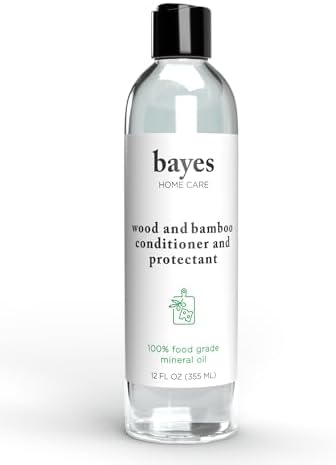
- Bayes high-performance bamboo & wood conditioner and protectant uses the highest quality food grade mineral oil for cutt…
- Protect your wood and bamboo kitchen items with this wood oil for cutting board preservation. Without mineral oil food g…
- Directions: Wash wood with mild soap and water and allow to dry thoroughly. Apply this cutting board oil food grade form…
A Small Swap, Big Impact
If you’re building a cleaner, lower-waste kitchen, start with the things you touch every day.
For us, that meant saying goodbye to worn-out plastic boards and investing in something that sheds less plastic into our food, lasts with care, and yes, looks more beautiful.
It’s been one of our favorite changes in this whole zero waste journey.
If you’re looking for your next swap after this one, our PFAS-free cookware guide is a good next read.
Want more clean kitchen content like this? Join the MZWK community: a new practical guide every Sunday, without the guilt trip.
Discover more from My Zero Waste Kitchen
Subscribe to get the latest posts sent to your email.