Is Your Cookware Slowly Poisoning You? A Guide to PFAS-Free Pots and Pans
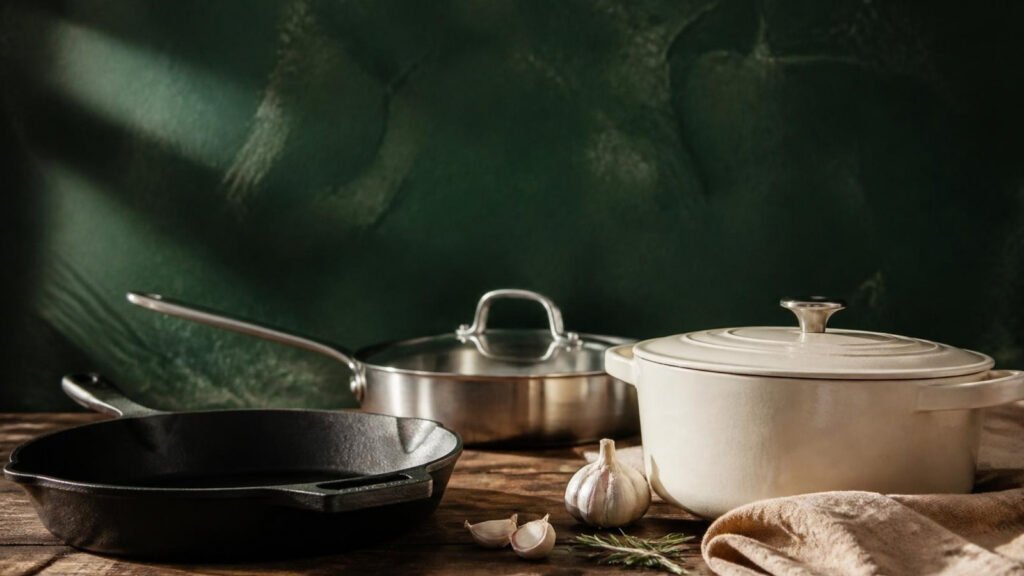
79% of nonstick pans contain PFAS — and 8 states have already banned them. Here’s what PFAS actually does, which brands to trust, and the safest materials for your kitchen.
That ‘biodegradable’ sponge? Probably isn’t. That ‘eco-friendly’ pan? Check the fine print. Here’s how to see through the marketing and find products that actually deliver on their sustainability claims.
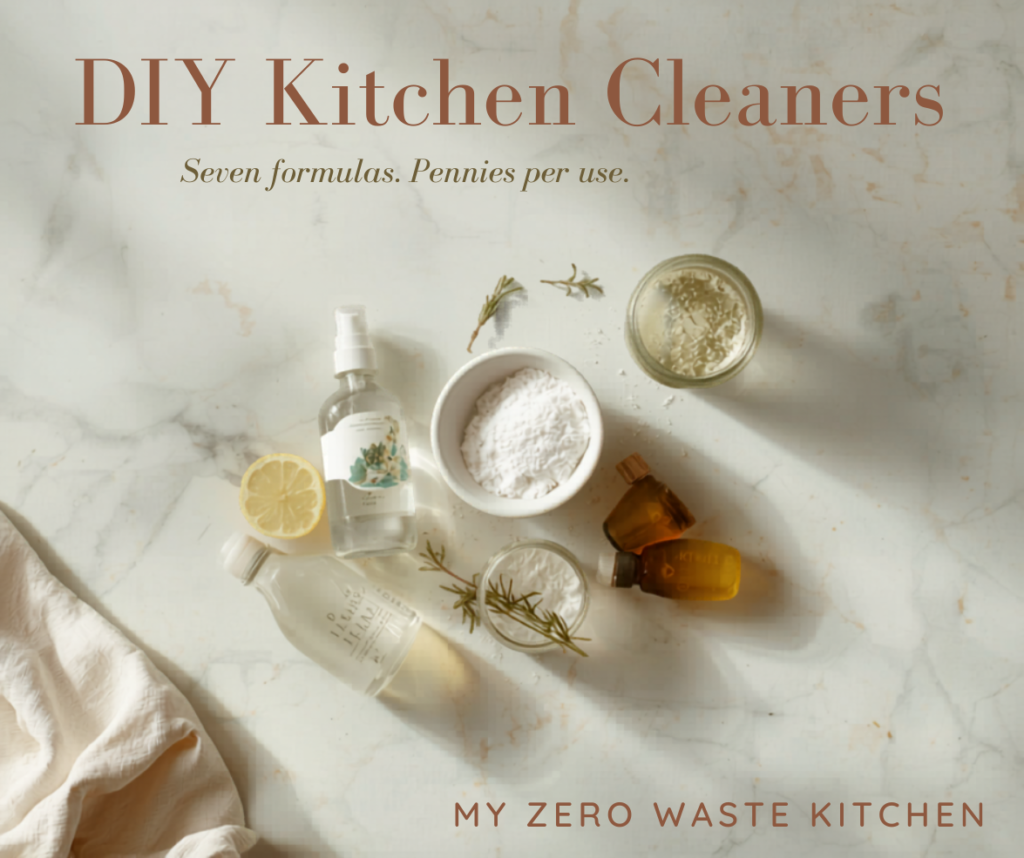
The average American household spends $600+ per year on cleaning products. Most of them contain ingredients you can’t pronounce and come in plastic you can’t recycle. Here are 7 DIY replacements that cost pennies, work better, and don’t poison your kitchen.
Spring is the perfect time to rethink what’s in your kitchen. Here are 9 practical, zero-waste swaps that reduce toxins, cut waste, and actually save money over time.
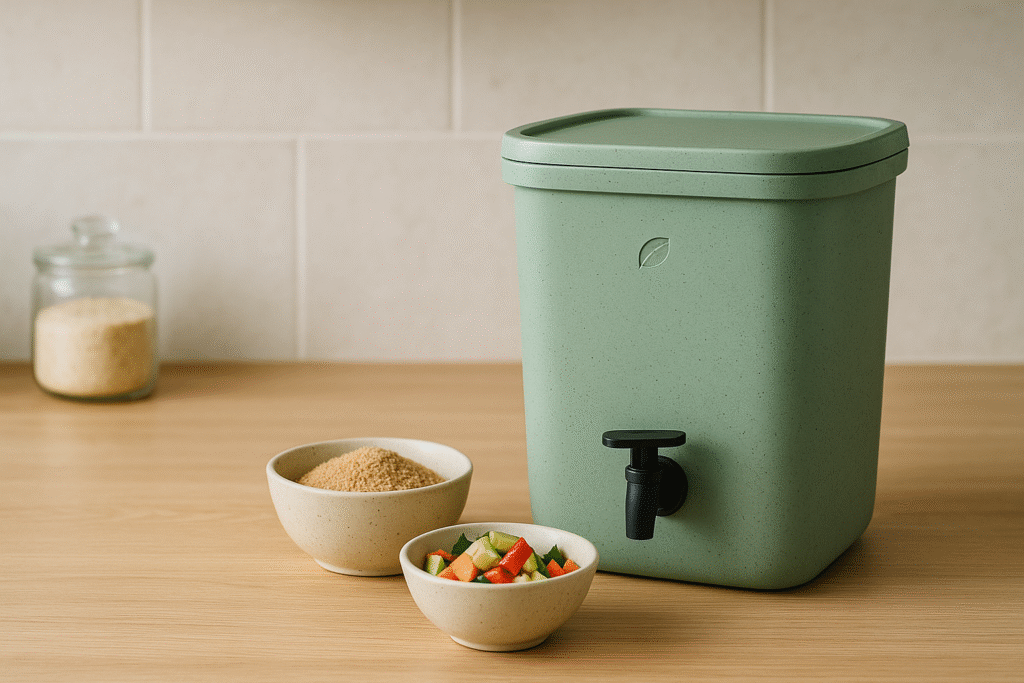
Bokashi compost bin on a kitchen counter with bran and kitchen scraps.
June 19, 2025; 5 min read Your banana peels and coffee grounds deserve better than the trash bin. TL;DR: Transform
Peels aren’t trash — they’re tools waiting to be used. TL;DR: Before you toss your lemon, orange, or grapefruit peel,
Zero-waste, all-purpose, almost free—made with the cleanest possible ingredients. 1. Choose Premium, Truly Clean Inputs What How to Source “Best-in-Class”
Plastic cutting boards shed microplastics and dull your knives. Discover why switching to wood is better for your health, kitchen, and the planet.