The last tomatoes of the year are ripening on my kitchen windowsill, and the vines they came from look rough: brown leaves, black spots, a few split fruits. The oak at the edge of the yard has started dropping, and every morning there is a little more gold on the path to the beds.
I used to spend this week stuffing yard bags. Now I spend it deciding what stays, what goes, and what becomes next year’s soil. The garden fed my kitchen all summer. This is when it gets paid back.
The EPA’s yard trimmings data estimates that Americans generated 35.4 million tons of yard trimmings in 2018, about 12.1 percent of all municipal solid waste. About 22.3 million tons were composted or mulched, which is good news. But landfills still received about 10.5 million tons, and another 2.6 million tons were burned. A zero-waste fall garden cleanup is mostly about keeping that material home and putting it to work.
Why a Messy Fall Garden Is a Working Garden
A garden in late September is not finished. It is changing jobs, and three things are happening at once.
First, small animals are moving in for winter. The Xerces Society, the invertebrate conservation group behind the “leave the leaves” campaign, points out that woolly bear caterpillars tuck into leaf piles, that luna moths and swallowtails disguise their cocoons and chrysalises as dried leaves, and that bumble bee queens burrow only an inch or two into the soil to hibernate. A couple of inches of leaves is their shelter.
Standing stems matter too. Xerces notes that about 30 percent of native bees are tunnel nesters, like leafcutter and mason bees, and hollow stems are prime real estate. The Missouri Department of Conservation makes the same case for birds: leaf litter holds the insects birds eat through fall and winter, and its guidance says skipping some raking really does help wildlife. Seed heads on coneflowers and sunflowers are a winter pantry.
Second, disease is settling in right alongside the good guys. University of Missouri Extension’s guide to disease prevention in home vegetable gardens says many plant pathogens survive the winter in old plants and debris. Iowa State University Extension says Septoria leaf spot and early blight, the two diseases that lace my tomato leaves every August, both overwinter on infected debris.
Third, you are sitting on free fertility. Leaves, healthy spent plants, and kitchen scraps are the raw ingredients for compost, mulch, and leaf mold. Buying those back in plastic bags next spring makes no sense.
The garden feeds the kitchen all summer, and in fall the kitchen and the garden get to feed the soil back.
So the question is not “clean up or leave it” but “which parts go where.” Sick vegetable plants leave, healthy material becomes compost or mulch, and the flower borders stay a little wild until spring.
Where I’ll Be Honest With You
“Leave the leaves” does not mean leave a thick mat on your lawn. University of Missouri horticulture specialist David Trinklein notes that leaves left over turf can pack into a tight mat, and even the National Wildlife Federation says a thick layer will smother a lawn. The fix is to shred them, not bag them. Trinklein says a layer up to six inches thick can be mulched into a lawn with a mower with no ill effects, and Penn State Extension reports research in which mowing leaves into turf improved grass quality and reduced broadleaf weeds.
Not every insect sleeping in your garden is on your side. University of Minnesota Extension says squash bugs overwinter as adults under plant debris and recommends cleaning up cucurbits in fall to reduce hiding spots. Squash vine borer larvae, the same source says, burrow one to two inches into the soil and stay until the following summer. So I clean up the vegetable beds. The habitat I leave is in the perennial borders and along the fence line, not around last year’s zucchini stumps.
Your backyard compost pile is not a sterilizer. MU Extension says debris from diseased plants should not go in a compost pile, because home piles often do not get hot enough to kill the pathogens. Its composting guide says a properly built heap’s center should reach 110 to 140 degrees F, which kills some weed seeds and disease organisms, and recommends a minimum heap of 5 by 5 feet and 3 feet high. Most kitchen-scrap piles are smaller and cooler. Even hot piles have limits: a University of Illinois summary for eOrganic reports that in one study of 17 plant pathogens, a form of Fusarium and one other soil fungus survived small-scale static pile composting, though at greatly reduced levels.
Be careful with the big numbers you see online. You will see claims that 30 million tons of yard waste go to landfills every year. The EPA’s data puts the landfilled amount at about 10.5 million tons in 2018; the 35 million figure is total generation, most of it composted. The problem is real without inflating it.
The Fall Garden Cleanup, Ranked by Payoff
This is the order I work in, from the job that saves the most grief next year down.
1. Pull the Sick Vines First
Tomatoes with leaf spot or blight, squash killed by vine borers, anything obviously diseased: out, roots and all, along with the fallen leaves beneath, and not into the home compost. MU Extension says removal reduces the chance of diseases building up over the years and suggests burying the debris outside the garden. If your town collects yard waste, ask how it is processed before relying on it for diseased material. Then note where these crops grew: MU’s rule of thumb is to keep related crops out of the same spot for at least three years.
Best for: anyone who fought leaf spot, blight, squash bugs, or vine borers this summer.
2. Shred the Leaves Instead of Bagging Them
Penn State Extension’s advice: mow over the leaves slowly so the blades can chop them. A mulching mower works best, but a regular one will do. Penn State says up to about half an inch of shredded leaves is beneficial to the lawn; move the rest to beds as a 2 to 4 inch mulch. I stay at the low end on vegetable beds so the soil warms in spring.
Best for: yards with a big shade tree and a lawn buried in leaves by mid-October.
3. Plant Garlic Where the Tomatoes Were (If They Were Healthy)
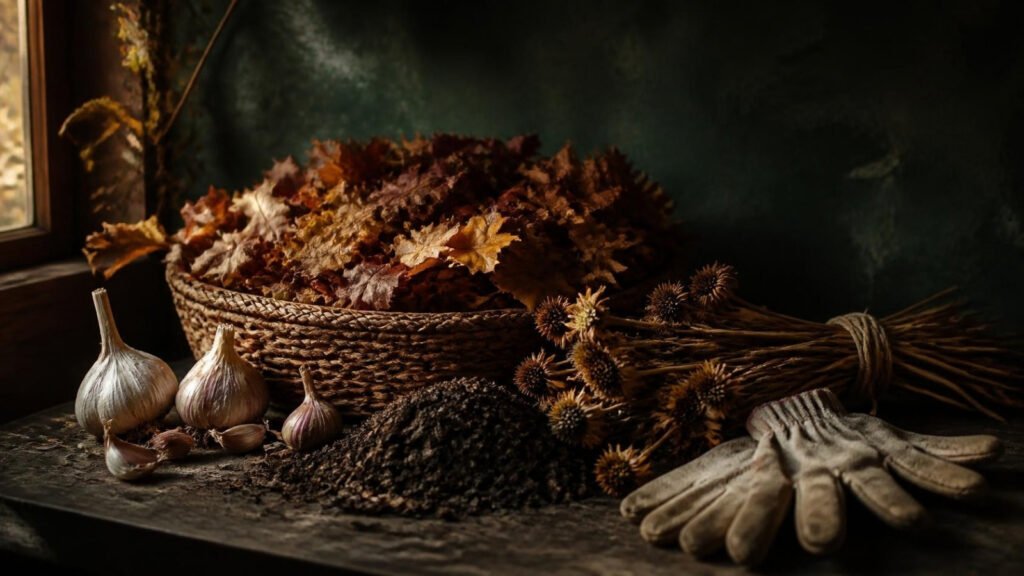
Garlic is the most kitchen-rewarding thing you can plant this fall. Lincoln University’s Missouri garlic guide recommends October or early November, 6 to 8 weeks before the ground freezes, with cloves 2 to 4 inches deep and 3 to 6 inches apart under about 3 inches of clean straw. MU Extension’s Trinklein says pointed side up. I use shredded leaves as the mulch. Lincoln notes softnecks store longer, which matters if you want garlic in the kitchen through spring.
Best for: cooks who go through garlic fast. Replant your biggest cloves each fall and you never buy seed garlic again.
4. Compost the Healthy Plants With Your Kitchen Scraps
Bean vines, clean pepper plants, weeds that have not set seed, plus the peels, cores, and coffee grounds from the kitchen: this is what compost is for. MU Extension lists leaves at roughly a 50:1 carbon-to-nitrogen ratio and says about 30:1 is ideal, so my rule of thumb is a few buckets of kitchen scraps and green material with every armload of leaves. MU says to keep grease, fat, meat, and bones out, and that traditional composting takes three to nine months.
Best for: anyone whose bin runs short of browns. Stash dry leaves beside it for next summer’s scraps.
5. Leave the Flower Stems and Seed Heads Standing
In the perennial and pollinator beds, I do almost nothing in fall. Seed heads stay up for birds and hollow stems for bees. Trinklein notes perennials can be cut back any time after dormancy, but “can” is not “must.” In spring I follow the Xerces stem-nesting guide and cut to staggered stubble of 8 to 24 inches, and the trimmings go to the compost.
Best for: native plantings and flower beds away from disease-prone vegetables.
6. Start a Leaf Mold Pile
Leaf mold is compost made almost entirely of leaves. Penn State Extension’s method: pile them, pack them down, water, and wait a couple of years, or shred and turn occasionally to speed that to 6 to 12 months. A ring of wire fencing is all the equipment I use.
Best for: gardeners with more leaves than their bin can take and some patience.
7. Sow a Cover Crop on Empty Beds
MU Extension’s cover crop guide says cereal rye can be planted later in fall than any other cover crop, while oats winterkill and need no spring management. Illinois Extension suggests broadcasting 4 to 5 pounds of rye per 1,000 square feet and warns it does not die in the cold: terminate it in mid to late spring, before it sets seed and about two weeks before you plant.
Best for: larger gardens with bare soil over winter. Use leaf mulch instead on beds you plant very early.
Skip entirely: bagging leaves and healthy spent plants for the curb, then buying bagged mulch and compost in spring. You haul the same resource twice and strip the yard of winter shelter.
The Cost Math
I have not found an authoritative dollar value for a yard’s worth of leaves, so this is my own estimate. Plug in your local prices.
Take 100 square feet of bed mulched 3 inches deep. That is 25 cubic feet, or about 12 to 13 of the common 2-cubic-foot bags. At a hypothetical $5 a bag, that is roughly $60 to $65 for one modest bed, every year, plus the plastic. Shredded leaves cover it for free, and homemade compost and leaf mold replace bagged amendments the same way.
The other side is small: at Illinois Extension’s rate, a 200-square-foot plot needs about a pound of rye seed, and garlic is a one-time purchase if you replant. The real cost is a few weekend hours. For me, that trade has been worth it every year.
Your 3-Step Fix
- This weekend: pull any diseased tomato, squash, or cucumber plants and the leaves under them, and keep them out of your home compost. Write down which beds they came from so you can rotate next year.
- As the leaves fall: mow them into the lawn in a thin layer, spread shredded leaves 2 to 4 inches deep on beds, and stockpile a few bags next to the compost bin for winter kitchen scraps.
- By early November: plant garlic in one cleared bed, sow cereal rye on any bed that would otherwise sit bare, and leave the flower stems and seed heads standing until spring.
Frequently Asked Questions
Can I compost tomato plants with blight or leaf spot?
Not in a typical home pile. MU Extension says home piles often do not get hot enough to kill the pathogens, and suggests burying diseased debris outside the garden instead. Healthy tomato plants are fine to compost.
Will leaving leaves on my lawn kill the grass?
A thick, unbroken mat can. MU Extension’s David Trinklein says up to six inches of leaves can be mulched into a lawn with a mower without harm. Move any excess to beds or compost.
When should I plant garlic in Missouri?
Lincoln University’s Missouri garlic guide recommends October or early November, 6 to 8 weeks before the ground freezes, cloves 2 to 4 inches deep under about 3 inches of straw.
Should I cut back my perennials in fall or spring?
For flowers and native plants, I wait until spring. The Xerces Society recommends leaving dead stalks up over winter for stem-nesting bees and cutting to 8 to 24 inch stubble in spring. Badly diseased plants come out in fall.
Is it too late to plant a cover crop in October?
For most cover crops the window is closing, but MU Extension notes cereal rye can be planted later than any other. Sow it as soon as beds are cleared. If you miss the window, shredded leaves will protect bare soil instead.
Keep Reading
- Build a DIY zero-waste compost bin to hold this fall’s leaves and scraps
- Bokashi composting for small kitchens for scraps through the cold months
- Root-to-stem cooking to use more of the harvest before anything reaches the pile
What is the one plant you always pull in fall, and the one you always leave standing for winter? Tell me in the comments, especially if you garden in Missouri.
Want more clean kitchen content like this? Join the MZWK community — practical, no-BS guides for a healthier, lower-waste kitchen without the guilt trip.