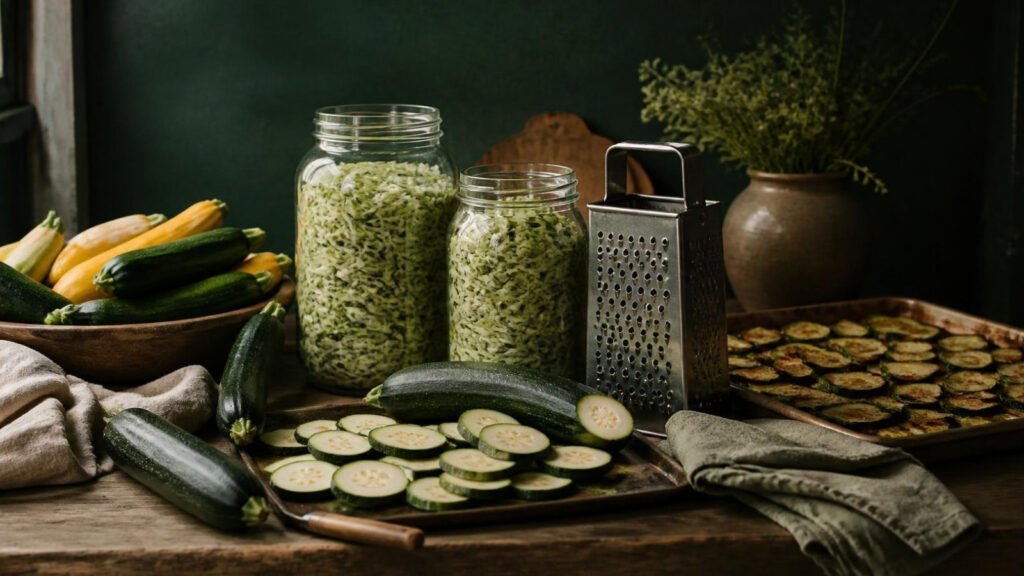
There are eleven zucchini on my counter. Four came off my own two plants, which I put in the ground in May during a brief episode of optimism. The other seven arrived Tuesday in a CSA box with a handwritten note on top that said, cheerfully, “more squash next week.”
I have walked past them every day for five days. Every single day I have thought the same sentence: I will deal with those tomorrow.
That sentence is the whole problem, and it has a measurable cost. According to ReFED’s residential figures for 2024 — the most recent year available — American homes generated 23.5 million tons of surplus food, and produce was by far the largest category at 10.5 million tons. Just under half of what we throw away at home is fruit and vegetables. The encouraging part, and it is genuinely encouraging, is that household food waste actually fell that year by nearly 950,000 tons, the first real decline since the pandemic. People are getting better at this. This post is about one specific way to get better at it.
Some links in this post are affiliate links. As an Amazon Associate I earn from qualifying purchases, at no extra cost to you.
Why Produce Specifically Fails
Nobody forgets a bag of rice. Rice makes no demands. It sits there indefinitely and asks nothing of you, and when you finally want it, the decision is small: pot, water, done.
Zucchini is the opposite. Every zucchini on my counter is an open question. Do I slice it or grate it? Roast it or sauté it? Is this a dinner thing or a bread thing? Do I have the eggs for the bread thing? The vegetable is not asking to be eaten so much as asking to be decided about, and it asks again every time I walk through the kitchen. By Thursday I have declined to answer maybe thirty times, and the squash has gone soft on the underside, and the decision makes itself.
Produce does not rot because you are lazy. It rots because it asks you a question every day and you are out of answers.
I want to be precise about this, because the standard framing is insulting and it also does not work. The problem is not that you do not care. You bought the vegetables. You drove to the pickup. Caring was never the missing ingredient. The missing ingredient is a default — one move you make without deliberating, the way you brush your teeth without weighing the merits. Everything below is built to remove decisions, not to add discipline.
The Four Methods, Ranked by Effort to Payoff
These are in order. If you only ever do the first one, you will still cut your August losses substantially.
1. Roast the Tray
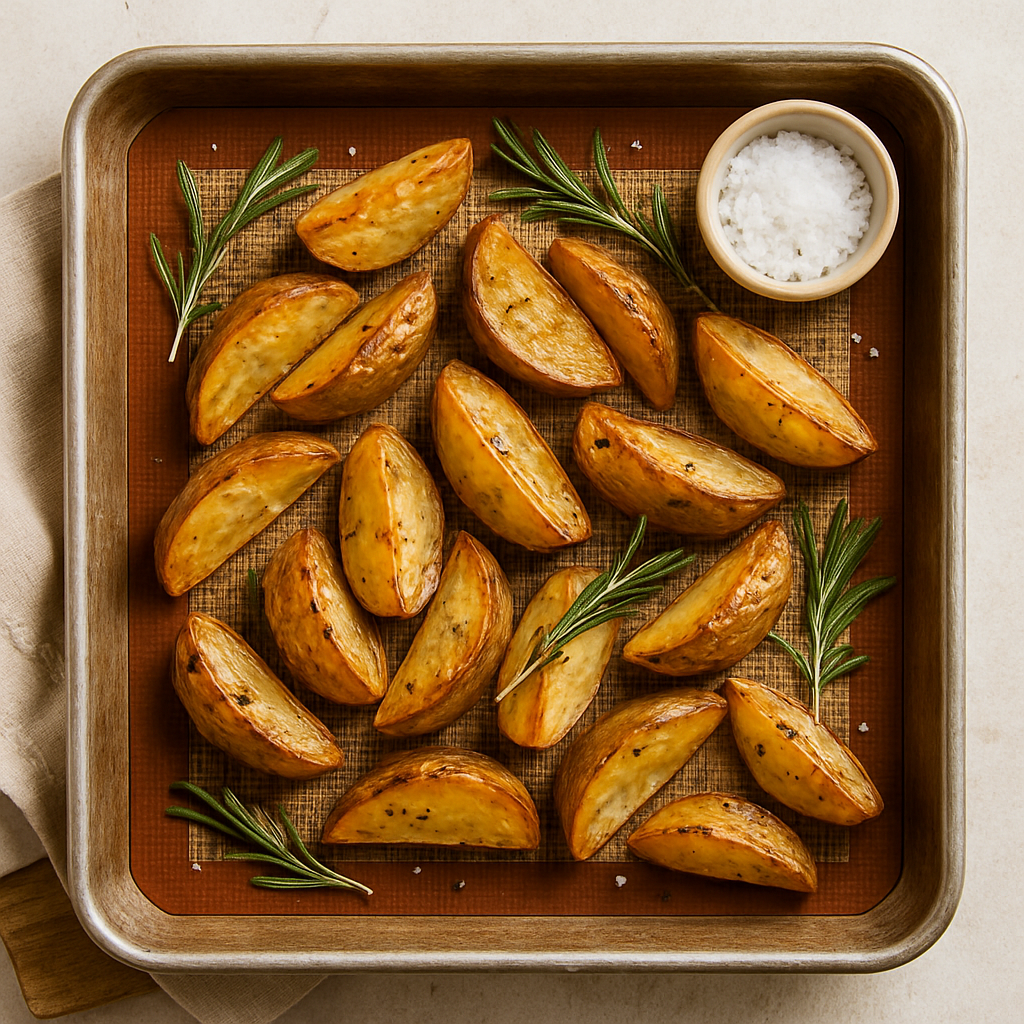
Everything soft, awkward, or slightly past its best goes on one sheet pan. Zucchini in thick coins, peppers in strips, halved cherry tomatoes, onion wedges, the sad end of the eggplant. Oil, salt, 425°F, roughly 25 to 30 minutes, no arranging. You are not making a recipe. You are converting eleven separate decisions into one container of roasted vegetables that goes into grain bowls, eggs, sandwiches and pasta all week without further thought.
Roasting also solves the water problem before it starts, which matters enormously for squash. The oven drives off moisture that would otherwise turn into ice crystals and then into mush. Cooled roasted vegetables go into the fridge for the week, or into the freezer if the week is already full. I treat frozen roasted vegetables the way I treat any cooked leftover and eat them within a couple of months — that is my own rule of thumb, not an official figure, and I would rather say so than make one up.
Best for: mixed odds and ends, the Sunday you have twenty minutes and no plan, and anyone who has never preserved anything and does not want to start with a project.
2. Freeze Flat
If you have searched how to freeze zucchini, you have hit forty pages disagreeing about blanching. Here is the actual guidance. The National Center for Home Food Preservation calls for washing summer squash, cutting it into half-inch slices, water blanching for 3 minutes, cooling promptly, draining and packing with half an inch of headspace. For grated zucchini destined for baking, the instruction is different: steam blanch in small quantities for 1 to 2 minutes, until it turns translucent.
Blanching is not fussiness. It exists because heat slows or stops the enzymes that cause loss of flavor, color and texture, and USDA is blunt that freezing alone only slows enzyme activity — it does not halt it. Unblanched vegetables keep quietly degrading at 0°F. They stay safe. They just stop being good sooner.
Some vegetables genuinely skip this step. University of Minnesota Extension lists diced or cut onions, green onions, leeks and peppers as not requiring blanching before freezing, and fresh herbs do not appear on the blanching tables at all. Zucchini is not on that list, which is worth knowing before you decide to ignore it.
The “flat” part is a separate technique and it is the one people skip. After blanching and cooling, spread the pieces in a single layer on a sheet pan and freeze them loose for an hour before they go into a jar. Penn State Extension notes that quick freezing forms small ice crystals, and small crystals are what stand between you and a mushy result. Freezing loose on a tray also means you pour out a handful instead of chiseling at a solid brick.
Best for: a real glut — the week the plants produce faster than you can cook — and for people who bake, since grated blanched zucchini is the single most useful thing to have in a freezer in February.
3. Blend and Freeze Herbs in Oil
Basil bolts in August and a CSA share will bury you in it. Penn State Extension gives a workable ratio: chop the herbs, then mix a third to a half cup of oil per 2 cups of chopped herbs. Portion it into an ice cube tray, freeze, then move the cubes to a jar. Extension also suggests blanching larger herb leaves such as basil for 15 seconds to stop enzyme reactions, which keeps the color from going black.
One food-safety rule here is not optional. Oregon State University Extension is explicit that low-acid foods stored in oil create an oxygen-free environment that suits Clostridium botulinum, and that fresh herbs in oil must be used within 4 days refrigerated, or frozen for longer storage. Penn State says the same thing more briefly: oil should only be added to herbs if it is going into the freezer. Do not leave a jar of herbs in oil on the counter. Not for a day.
Best for: soft summer herbs, especially basil, and for anyone who wants one high-impact thing in the freezer that makes a January dinner taste like August.
4. Keep a Scrap Bag for Stock
A half-gallon container lives in my freezer door and collects onion ends, carrot tops, celery butts, leek greens, herb stems, corn cobs. When it is full, everything goes in a pot with water for an hour. This is the lowest-effort method on the list because it requires no decision at all — the scrap either goes in the container or it does not, and that is the entire choice.
Skip anything bitter or overpowering: brassica trimmings, and any part of a zucchini, which contributes almost nothing but water. FoodSafety.gov puts soups and stews at 2 to 3 months in the freezer for best quality, so I make stock in batches I will actually use in a season rather than building a permanent archive.
Best for: the trimmings you are already generating every night, and for households where nobody has time for a “preserving session” but everyone chops onions.
Doing It Without Plastic
The whole kit is a sheet pan and some freezer-safe glass. That is not minimalism as an aesthetic, it is just what the job needs.
Jar shape is the part people get wrong. NCHFP states plainly that regular glass jars break easily at freezer temperatures and directs you to wide-mouth dual-purpose jars made for freezing and canning, which are tempered to withstand temperature extremes. UC Master Food Preservers add the geometry: use wide-mouth, straight-sided jars, because straight sides let expanding contents push upward instead of against a shoulder. A shouldered jar traps the ice below a narrower neck, and the glass loses.
Headspace is the other half. NCHFP’s table gives half an inch for dry-packed food in both pints and quarts, regardless of opening width. For liquid packs it widens: half an inch for a wide-top pint, 1 inch for a wide-top quart, three-quarters of an inch for a narrow-top pint, and a full inch and a half for a narrow-top quart. Penn State simplifies for vegetables — half an inch for all container types, with loosely packed vegetables like asparagus and broccoli needing none. NCHFP also advises against freezing fruits and vegetables in any container larger than half a gallon, because a big container freezes too slowly.
- Sheet pan first, jar second. Tray-freeze loose, then transfer — this is the flat-freezing step that keeps pieces separate and crystals small.
- Cool food fully before it goes into glass. Hot food into cold glass is how you crack a jar.
- Freeze jars upright and uncapped or loosely capped until solid, then tighten.
- Do not overload. Penn State advises against adding more than 2 pounds of food per square foot of freezer space at once, since a big load slows freezing for everything already in there.
- Stainless steel pans with lids are an excellent alternative for cooked food and stack far better than jars.
Where I’ll Be Honest With You
Three things get recommended constantly in August that do not deliver, and pretending otherwise is how people conclude that preserving does not work for them.
Freezing whole tomatoes. You can do it, and the skins do slip off beautifully under warm water. But NCHFP is direct about the ceiling: use them only for cooking or seasoning, because tomatoes will not be solid when thawed. If you are picturing a frozen tomato you will slice onto a sandwich in November, that tomato does not exist. Freeze them for sauce and be happy; expect nothing else from them.
Cucumbers. They fail worse than anything else on the counter. Oregon State’s list of foods that do not freeze well puts raw cucumbers alongside lettuce and radishes with the outcome spelled out: limp, water-logged, and quick to develop oxidized color, aroma and flavor. The one caveat is real but limited — cucumbers can be frozen as marinated freezer pickles, and OSU notes those do not have the texture of regular pickles. Cucumbers are a refrigerator-pickle vegetable or an eat-them-now vegetable. There is no third option.
Drying soft herbs. This one needs a correction to the usual advice, including advice I have given. Oregon State lists sage, thyme, rosemary, summer savory, cilantro and parsley as the easiest to dry — so cilantro and parsley are not actually the problem. Basil is. Basil, tarragon, lemon balm and the mints carry so much moisture that they will mold if they are not dried fast, and dried basil in particular gives up most of what made it worth growing. Minnesota Extension also notes that dried herbs hold their flavor and color for about three months in a cupboard, which is shorter than most people assume. Freeze the basil in oil. Dry the woody ones.
One more admission: frozen herbs go limp when thawed and Minnesota Extension says outright they are not suitable for garnish. They are for the pot, not the plate.
The 30-Minute Sunday Version
Set the oven to 425°F before you do anything else. The oven preheating is what commits you.
- Minutes 0 to 8. Everything soft or awkward gets cut and spread on the sheet pan. Oil, salt, into the oven. Do not arrange it.
- Minutes 8 to 16. While it roasts, put a pot of water on. Grate or slice the surplus zucchini. Steam blanch grated zucchini 1 to 2 minutes until translucent, or water blanch half-inch slices for 3 minutes, then cool promptly in cold water and drain hard.
- Minutes 16 to 22. Chop the herbs, mix with a third to a half cup of oil per 2 cups of herbs, portion into an ice cube tray, into the freezer.
- Minutes 22 to 26. Every trimming from the last twenty minutes goes into the stock container in the freezer door. Not the zucchini ends.
- Minutes 26 to 30. Roasted vegetables out and cooling. Blanched squash spread on a second tray to freeze loose, then into wide-mouth straight-sided jars with half an inch of headspace, labeled with contents and date.
Thirty minutes and the counter is empty. More to the point, Thursday no longer has a question in it.
Frequently Asked Questions
Does glass prevent freezer burn?
It helps, but the seal and the headspace do the real work. Freezer burn is moisture loss from air contact — Minnesota Extension’s fix is to remove air and seal airtight. A rigid glass jar with a tight lid and minimal empty space performs well. And if you do get some, USDA is reassuring: freezer burn does not make food unsafe, merely dry in spots, and you can cut those parts away.
Is blanching really necessary?
For most vegetables, yes, if you want them to be good in six months. Blanching slows or stops the enzymes that degrade flavor, color and texture, and USDA notes freezing only slows enzyme activity rather than stopping it. Skipping it is a quality decision, not a safety one. The documented exceptions are diced or cut onions, green onions, leeks and peppers, which Minnesota Extension says do not need blanching.
Will my jars break in the freezer?
Not if you use the right ones. NCHFP warns that regular glass jars break easily at freezer temperatures and recommends wide-mouth dual-purpose jars made for freezing and canning, which are tempered for temperature extremes. Use straight-sided jars rather than shouldered ones, leave the recommended headspace, cool food before filling, and freeze upright.
How long does this actually keep?
At a constant 0°F, USDA says food is always safe — safety is not the clock you are watching. Quality is. Minnesota Extension recommends using frozen fruits and vegetables within 8 to 12 months, and FoodSafety.gov gives soups and stews 2 to 3 months for best quality. Label everything with a date, because you will not remember.
Is frozen zucchini watery?
Somewhat, always. Zucchini is mostly water, and freezing ruptures the cells that were holding it. NCHFP anticipates this directly in its grated zucchini instructions: if it is watery when thawed, discard the liquid before using. Blanching, draining hard, and freezing quickly on a tray all reduce it. Nothing eliminates it, which is why frozen zucchini belongs in bread, fritters, soups and sauces rather than anywhere it needs to hold a shape.
Keep Reading
- Fermentation 101 — the other half of preservation, for the cucumbers and cabbage the freezer cannot save
- The Zero Waste Freezer Blueprint — the organization system underneath all of this, so the jars get found and eaten
- Root to Stem Recipes — what to do with the trimmings once the scrap bag has taught you to keep them
What is the vegetable that always beats you — the one that comes in every August and goes out with the compost every September? Tell me in the comments, and tell me if you have found something that works, because I am still losing to cucumbers.
Want more clean kitchen content like this? Join the MZWK community — practical, no-BS guides for a healthier, lower-waste kitchen without the guilt trip.
Discover more from My Zero Waste Kitchen
Subscribe to get the latest posts sent to your email.